THE CUT
The pleacher
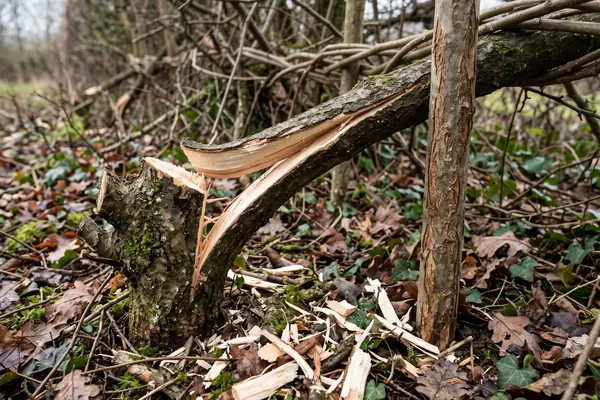
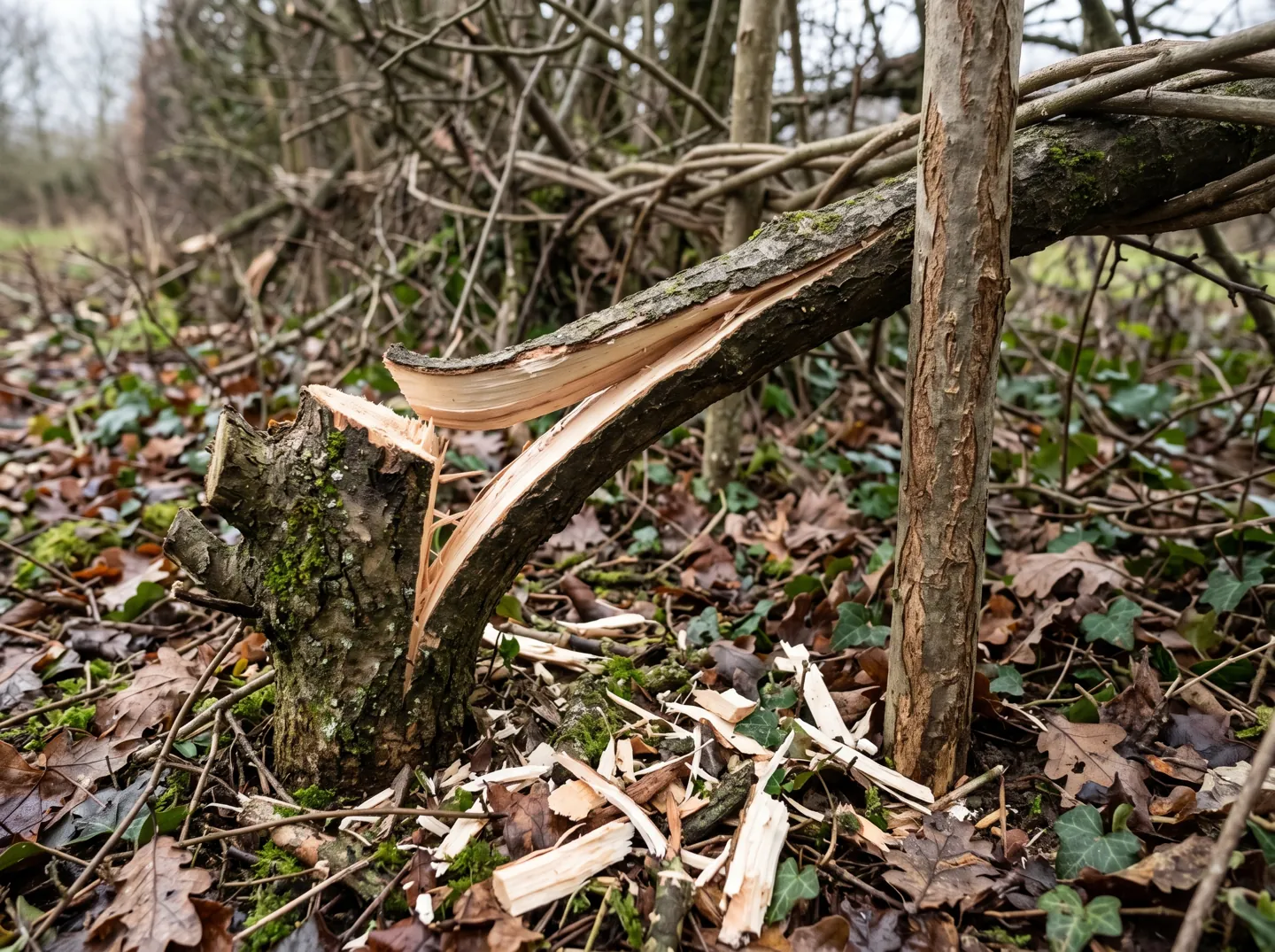
Stems are cut diagonally near the base and laid over while still attached. GOV.UK guidance describes laying these pleachers at about 35 to 45 degrees.
How it is done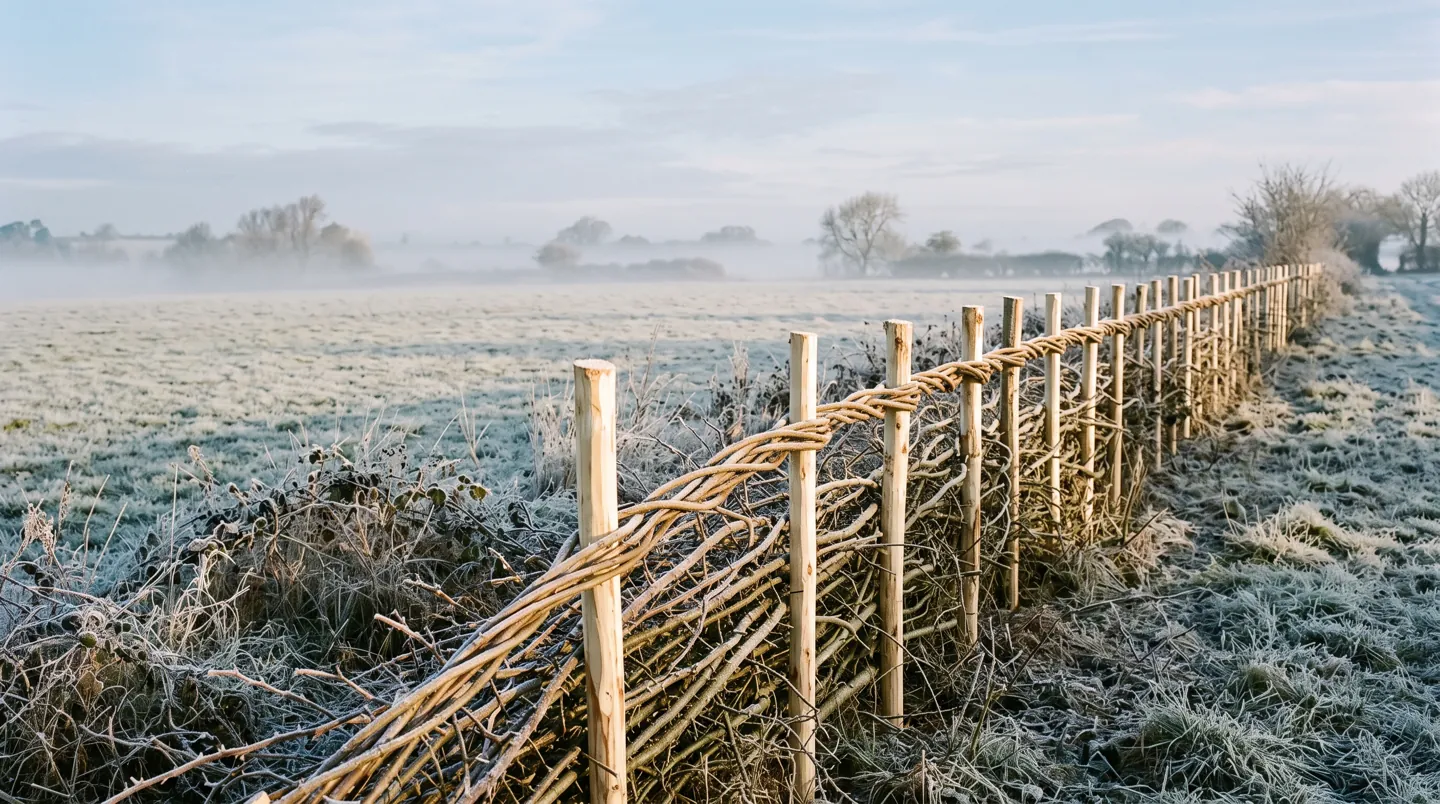
AN INDEPENDENT COUNTRYSIDE GUIDE
IN WINTER while the hedge is dormant
AI-generated image, not a photograph of a real person or place.
A laid hedge is cut, not cut down.
Each main stem is cut part way through near the ground and bent over, still attached. New shoots spring from the base, and an old, gappy hedge becomes thick and living again.
THE SHORT ANSWER
Left alone, a hedge thins at the bottom and turns into a line of trees.
Laying resets it.
THE CUT
Stems are cut diagonally near the base and laid over while still attached. GOV.UK guidance describes laying these pleachers at about 35 to 45 degrees.
How it is doneTHE FRAME
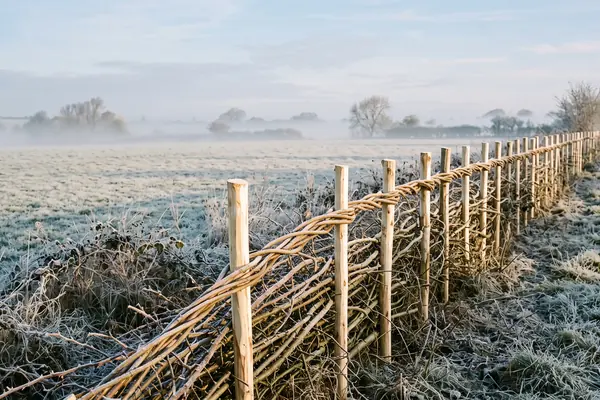
Wooden stakes give the laid stems support, and binders of willow or hazel are woven between them. In time they break down into the hedge.
Compare stylesTHE RESULT
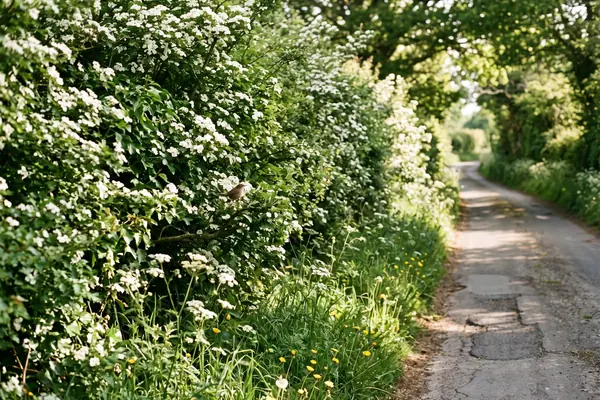
The National Hedgelaying Society says laying encourages vigorous new growth from the base, keeping the hedge dense, stockproof and good for wildlife.
Why wildlife gains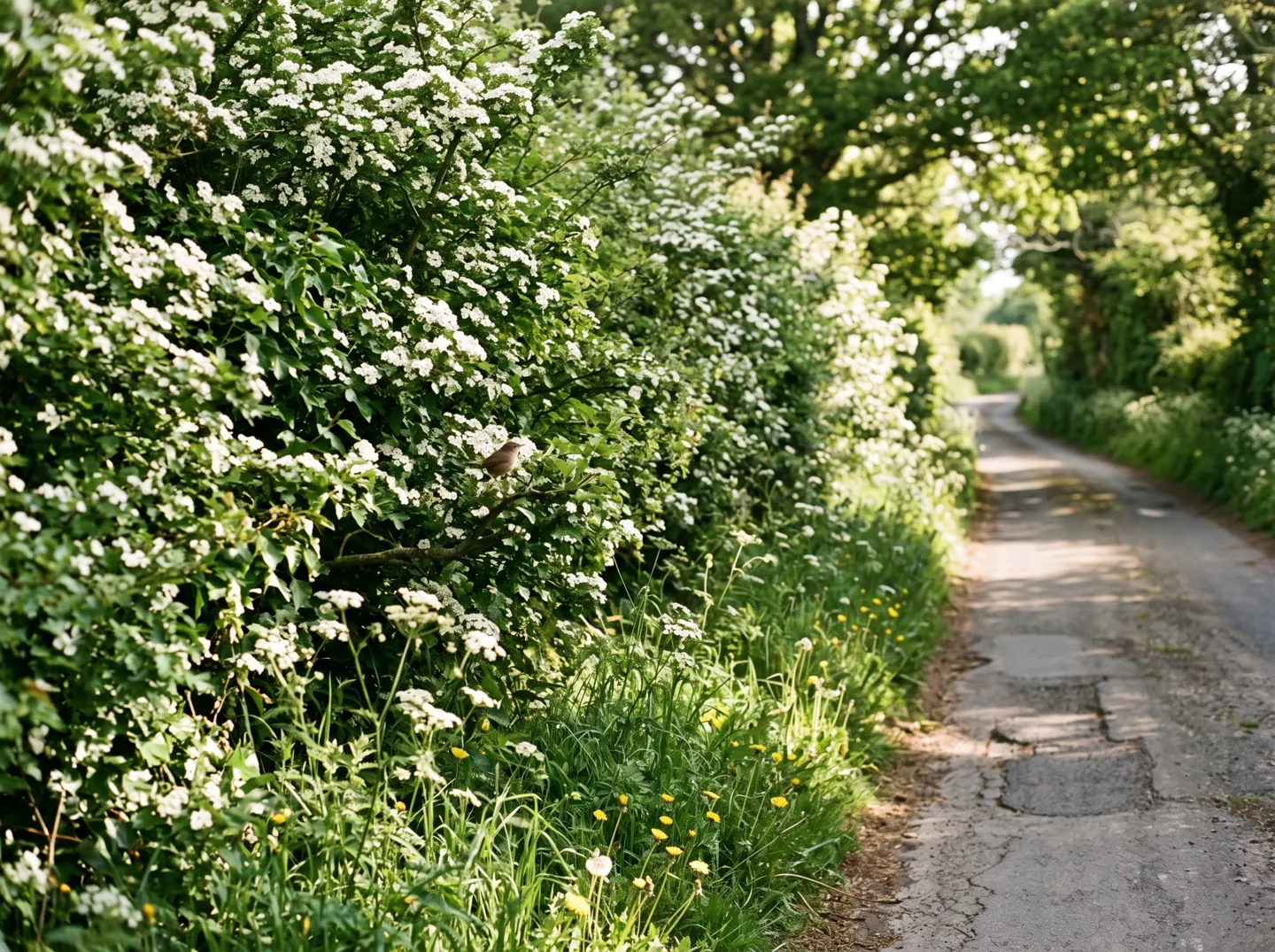
HOW A HEDGE IS LAID
These stages follow GOV.UK's hedgerow laying specification and Surrey Wildlife Trust's description of the craft. It is skilled work: the National Hedgelaying Society runs training and keeps a map of registered hedgelayers.
GOV.UK says to lay when the hedge is dormant, usually between 30 September and 31 March. Traditionally farmers did it between November and March.
Remove old wire and fencing, and clear bramble, clematis and other scrambling plants from the stems to be laid.
Cut each stem partly through near ground level and lay it at a low angle to close gaps, keeping all existing hedgerow trees.
Hold the pleachers with stakes and binders or crooks, then keep livestock off the new growth while it establishes.
TWO NUMBERS WORTH KNOWING
One figure on how often a hedge is laid,
one on how much to lay at a time.
≈ 50 years
Gap between layings, once established
Surrey Wildlife Trust says a well-managed hedge should be laid within its first ten years of growth and then again every fifty years or so.
HOW OFTEN · SURREY WILDLIFE TRUST
5%
Most of a hedge to lay in one season
Because laying can temporarily reduce habitat for wildlife, the Trust recommends laying no more than 5 percent of a hedge's total length each season.
HOW MUCH · SURREY WILDLIFE TRUST
The National Hedgelaying Society lists more than 130 registered hedgelaying contractors across the UK. Its 47th National Championships, at Chipping Norton on 10 October 2026, drew 116 competitors.
REGIONAL STYLES
Styles grew up around local livestock, landscape and hedge plants. Pick one to see what makes it distinctive. The bar shows the usual finished height.
Descriptions summarised from the National Hedgelaying Society's guide to regional styles, as used at its National Championships.
WHY WILDLIFE GAINS
The People's Trust for Endangered Species describes hedgerows as a living system. Trimmed to the same height year after year, a hedge becomes leggy and loses the thick base that so many animals need.
PTES suggests trimming every other year rather than every year, and in late winter rather than autumn, so blossom and berries survive. When a hedge finally outgrows its space it is rejuvenated by laying or coppicing, keeping the cycle turning.
In conversation
A pleacher is a hedge stem that has been cut partly through near the base and laid over while still attached to its stump. GOV.UK guidance says the cut should go no more than 10 centimetres above ground level.
In the dormant season. GOV.UK's hedgerow laying specification says usually between 30 September and 31 March, and Surrey Wildlife Trust says farmers traditionally laid hedges between November and March.
It looks drastic, but the aim is renewal. The National Hedgelaying Society says it encourages vigorous new growth from the base and extends a hedge's life, and Surrey Wildlife Trust advises laying only a small share of a hedge each season.
The National Hedgelaying Society says regional styles arose from landscape, farming practice, available materials and the plants in the hedge. Some hold cattle, some sheep, and some are laid on earth banks.
Surrey Wildlife Trust says hedges were traditionally laid with hand tools such as billhooks and axes, and that chainsaws now make longer stretches possible. Hedgelaying is skilled work, and the Society offers training.
Each figure on this page comes from the sources below.
ABOUT THIS NAME
doodleslasher.com is part of the DoodleSale portfolio. It isn't in an auction right now, but you can ask about leasing it.